everything about your dogs

Showing posts with label pets. Show all posts

Best Friends of Companion Animal Psychology

Share a photo of your happy pet for a chance to win a Companion Animal Psychology mug.

Companion Animal Psychology just turned five! As I said in that post, one of the best things about this blog is the community of people who read, share and support it.

Several recent posts have shown photos of happy dogs who are friends of Companion Animal Psychology.

This time, it’s over to you to join the celebrations by sharing a photo of your contented pet.

One person will win a Companion Animal Psychology anniversary bone china mug.

Click the link-up and follow the instructions to add your photo. The winning photo will be published on the blog and shared on social media when the winner is announced. More details are below.


The photo link-up is open until 4pm Pacific Time on Friday 14th April.

To add a photo of your pet, click the link and follow the instructions. You will have to supply an email address but this will only be used if necessary to communicate with you about the photos. You will not be subscribed to any email lists. (Click here to subscribe to Companion Animal Psychology; or read the privacy policy).

Please include your pet’s name. You have up to 50 characters if you wish to say something about your pet (e.g. “Bodger loves snow”).

The winning photo will be published on the blog and shared on social media when the winner is announced. By taking part, you consent for this to happen if your photo wins.

Only two entries per person. If you change your mind, you may delete your photo at any time. You must have copyright of the photo.

Photos are moderated so you may have to wait for yours to appear. Photos are displayed in a random order, so if you submit two photos, they may not appear together.

I have recruited an independent judge to choose the winner. The judge’s decision is final and no correspondence will be entered into.

The winner will be sent an email to request their postal address to send the mug to. In the event that the winner does not respond to this email within 7 days, they will forfeit the mug and another winner will be chosen.

Companion Animal Psychology supports the humane treatment of animals and photos showing prong, choke or shock collars are not permitted.


A man's hands holding a camera while taking a photo of a dog and cat
Photo: Africa Studio (Shutterstock.com)

The benefits of pets for children

A review of the literature concludes that pets may have psychological benefits for children – such as better self-esteem – but more research is needed.

A girl and her dog sit together on the grass. Pets are good for children - read more about the benefits.


The review, by Rebecca Purewal (University of Liverpool) et al involved searching the scientific literature from 1960 to 2016 for studies that examine the effects of pets on children’s psychological health. 22 studies were identified and analysed further.

The results show benefits in some areas, but not enough evidence to draw conclusions in other areas. The paper also considers the potential mechanisms for such effects.

The scientists write,
“This paper provides a review of the evidence on the effects of pet ownership on emotional, behavioural, cognitive, educational and social development. Overall, the evidence suggests that pet ownership, and dog ownership in particular, may benefit these outcomes for children and adolescents. However, the evidence is mixed partly due to a broad range of different methodological approaches and varying quality of studies.”
The scientists used quite broad criteria in selecting the studies for their review. The 22 studies they looked at include two that have been covered on Companion Animal Psychology: Geerdts et al on pets and children’s understanding of biological concepts, and Rhoades et al on the effects of pets on the mental health of homeless youth.


First, the good news. Purewal et al found evidence that pets may be good for children’s emotional health, especially in terms of better self-esteem and reduced loneliness. There also seemed to be benefits in terms of being better able to take another person’s perspective, and for intellectual development.

They also found social benefits – bigger social networks, better social competence, and more social play. (Interestingly, pets have also been found to increase social networks for adults).

However, they did not really find evidence for improvements in depression and anxiety, and there was not enough evidence to come to any conclusions about behaviour development.

The paper describes several potential mechanisms by which pets might benefit children. The effects of the hormone oxytocin may lead to reduced stress, and pets may provide social support. Pets may help to meet children’s needs for a secure attachment, and this could be especially important in cases where a child has poor attachment to their parents. Indeed, it is possible that attachment to pets may be more important than simply owning a pet.

A boy holds his Yorkshire Terrier in his arms. Research shows pets are good for children.

The authors provide illustrations of how effects might occur for each of the domains where an effect was found. For example, improved educational outcomes may be due to better social support and reduced stress, which in turn may cause better executive functioning which will improve learning. Interactions with the pet (such as having conversations with the pet) may also lead to better language skills and social cognition.

Potential benefits of pets may also be related to the stage of a child’s development. For example, young children who are learning about social relationships may especially benefit from interactions with a pet. For self-esteem, it seems that pet ownership is of most benefit to younger children (under 6) and those over 10 years old.

The review highlights a number of problems with the available evidence, such as small sample sizes,  only collecting data at one time-point (therefore not able to assess potential effects over time), and sometimes classifying children as non-pet owners at a particular time when they may have previously had a pet that is now deceased.

Also, there are differences in the kinds of pets studied, and although it appears that dogs had the greatest potential, in some cases other pets (that were not dogs or cats) were not included as pets in the research. So more research is needed to understand the relationship children have with different kinds of pets, and whether this means some pets are more likely to be beneficial than others.

The authors also highlight potential confounding variables. For example, there might be differences in the kind of parent who acquires a pet compared to those who don’t, and it’s possible this could account for some of the effects.

As well as summarizing the literature, the article highlights the need for better quality evidence on the possible benefits of pets. While the potential risks of pets are outside the scope of the paper, they are mentioned. The most obvious might be the risk of dog bites, which young children are especially vulnerable to, but there are also risks of allergies, acquiring an infection from a pet, and of grief on the loss of pet.

That's why it's so helpful to know that research finds dogs and cats may benefit children in some aspects, such as improved self-esteem and bigger social networks. The review highlights priorities for future research, and shows that improving the quality of research in this field is essential. Hopefully it will be a catalyst for better-designed and longitudinal studies in this area.

The paper is open access so you can read it in full. You can also follow one of the authors of the study, Dr. Carri Westgarth, on twitter.

How do you think pets might help children?

You might also like: Reading to dogs may improve literacy and what pets do children have and which do they prefer?

You may also read this post in Chinese, courtesy of our friends at Bambiland Pet Photography and Dog Training.


Reference
Purewal, R., Christley, R., Kordas, K., Joinson, C., Meints, K., Gee, N., & Westgarth, C. (2017). Companion Animals and Child/Adolescent Development: A Systematic Review of the Evidence International Journal of Environmental Research and Public Health, 14 (3) DOI: 10.3390/ijerph14030234
Photos: Africa Studio (top) and zagorodnaya (both Shutterstock.com).

Companion Animal Psychology is a participant in the Amazon Services LLC Associates Program, an affiliate advertising program designed to provide a means for sites to earn advertising fees by advertising and linking to Amazon.com and affiliated sites.
Companion Animal Psychology is also a participant in the Etsy Affiliate Program, an affiliate advertising program designed to provide a means for sites to earn advertising fees by advertising and linking to Etsy.com.

My Thoughts About Vaccinations

My Thoughts About Vaccinations

I do not discriminate. If your pet is not current on their vaccinations for whatever reason...
If you have made a conscientous choice to NOT vaccinate your pet...
If you haven't had time to go to the vet...
If you haven't had money to go to the vet...
It makes no difference to me.

What does make a difference is that your pet is in obvious good care. I am not a vet! I do not diagnose or treat illness! But I have worked with animals long enough that I can usually recognize when a pet is too ill, or is contagious, and should receive other care before I advise you.

Corporate salons such as Petco and Petsmart require at least a rabies vaccine before they will make an appointment, as well as some private salons. I'm sure most trainers have the same policy.

Honestly, I have done my own research and don't really like vaccinations period. But YOU must do your own due diligence, your own research, and follow your own heart about such matters. Just because I'm convinced doesn't mean I'm right by anyone's standard but my own.

I feel very strongly that the entire veterinary industry is about fear, misinformation, manipulation, and control in order to harvest money.
Even the bleeding-heart, animal-loving, raised-on-the-farm kids who made it thru vet school in order to "make a difference" have come out of the system completely brainwashed. They sincerely believe all the shit they tell you.

But I don't buy into the system.... Not any of it. I don't understand going blindly thru life accepting everything you're told. The fact that students never question or stand up to information that doesn't feel right causes me to lose faith in them right out of the gate.
If one is "gifted" then they have instincts, intuition, an inner knowing that is beyond any book learning.
This describes me more than it does any vet I've ever met.

Look at dogs today compared to when some of us were kids. They all suffer from human diseases now! That NEVER happened until they started mandatory, mass vaccinations and neutering!

These solutions were meant to get humanity to higher understanding, but instead it became a for-profit industry that has a guaranteed success rate due to stacking the deck.
Industry owns all the scientist who write the text books and peer reviewed journals, and do all the research that is published, and make the meds and, "funds" the schools.... They own the pet industry. They guarantee you'll always need them!

Don't you find this suspicious???????

​I think for myself, do my own research, and I don't play into antiquated fears based on a herd mentality! I encourage you to do the same. Again, this is why I do what I do, the way that I do it.

But you must be responsible for your own choices, in all things, including your animals!


The Posts of the Year 2016

The most popular posts from Companion Animal Psychology in 2016.

Two Old English Sheepdogs sitting the snow; pretty winter scene


Looking back, I'm surprised by how much I wrote this year. During 2016 I published 58 blog posts, including 28 reviews of individual research papers on dogs, cats, ferrets, and the human-animal bond. I feel very lucky to have interviewed both Dr. Sarah Ellis and Jean Donaldson, and thank them both for such interesting and inspiring interviews. I published the first guest post, an important piece by James Oxley and Clare Ellis about how rabbits are missing out on basic pet care practices.

I really enjoyed hosting the Train for Rewards Blog Party, which was a huge lot of fun (look out for it again in 2017!). Thank you to everyone who participated, whether by writing a post or sharing your favourites. I also kept my list of dog training research resources up to date, and there you will find a list of research articles on dog training and places where you can read about those articles for free.

This year saw the start of the Companion Animal Psychology Book Club, and I am thrilled to have the chance to talk about books with like-minded people. The first books were The Trainable Cat: A Practical Guide to Making Life Happier for You and Your Cat by John Bradshaw and Sarah Ellis, and The Secret History of Kindness: Learning from How Dogs Learn by Melissa Holbrook Pierson.

These were the most popular posts of the year:

1. Losing a pet can lead to different types of grief.
A sad looking dog


2. Enrichment tips for cats (that many people miss)
Enrichment tips for cats that many people miss


3. Seven reasons to use reward-based dog training.
A happy dog waiting for a reward in a dog training session


4. Clicker training vs treat: Equally good in dog training.
A dog being clicker trained


5. Dog bite strength: It's not what you think.
A smiling pit bull dog in front of some flowers


6. Testing an automated and humane way to resolve barking.
A dog looks out of the window looking sad


7. In dog training, balance is off.
A Jack  Russell Terrier balances on a beam outside


8. Why science matters to our dogs and cats.
Four happy dogs running towards the camera


9. Less stress at the vet for dogs and cats.
A dog and cat visiting the vet


10. Why do people choose certain dogs?
Why do people choose certain dogs, animal welfare?


Honourable mention: Although it looks like posts about cats haven't done very well this year, there's an older post that's consistently had readers all through the year: Where do cats like to be stroked?

Thanks to all of you for your support and encouragement throughout the year. One of the best things about my blog is the way it has helped me get to know so many wonderful people.

What would you like to see on Companion Animal Psychology in 2017? Please feel free to send me an email at companimalpsych at gmail dot com with your ideas (subscribers can just hit the reply button - if you're not yet a subscriber, why not sign up?). I do my best to follow up these suggestions, and there are a couple of reader-inspired posts in the works at the moment.

And if you would like to propose a post, my guest post guidelines are here.

Wishing you a very Happy New Year and all the best for 2017!

Photo credit: Olga_i (Shutterstock.com). For other photo credits, follow the links.

Pets May Help Children Learn About Animal Welfare

Children’s beliefs about animal welfare and sentience are linked to their own experiences with animals.

A girl and her pet cat look at each other with love and affection

Surprisingly little is known about children’s beliefs and knowledge about animals. Yet this information could help to improve humane education programs for children. Two recent studies begin to fill this gap, with recommendations for how humane education is taught.

We know from previous research that even very young children like animals, and that children with pets are more likely to attribute biological concepts to animals than those without. Children’s experiences of caring for their pets mostly involve play, while the actual pet care is carried out by parents. Is it possible that even though these experiences are mostly social, children with pets will still have a better understanding of the care that pets need?

A series of group discussions with children aged 7 to 13 was conducted by Janine Muldoon (University of St. Andrews) et al (2016). The discussions lasted from 40 to 60 minutes, depending on school timetabling, and focussed on four types of animal: dogs, cats, guinea pigs and goldfish. Children were asked questions about how to care for the animals, how they knew when they needed care, and whether the animals have feelings.


Children’s answers showed a difference between what animals need in theory, and what was actually done in practice. Where they were unsure about an animal’s needs, their answers were framed in terms of their own experience, such as saying that a dog needed breakfast, lunch and dinner.

Answers also depended on the animal species. Dogs were seen as easier to understand if they needed something, although for all species the default position for an animal that needed something seemed to be ‘hunger’. Older children showed an understanding that some animals needed affection and interaction.

Children showed most knowledge about fish, and it seems that experiences of fish dying prompted them to consider what might have gone wrong. They also had knowledge about animals they did not themselves keep as pets. As you might expect, there were many gaps and variability in what they knew about animals and the five welfare needs.

Children talked about how they know what animals want. For instance, 11-year-old Caitlin* said,
“You can tell with a dog, because if they need the toilet they prance about and they brush up against your leg and they’ll go and sit at a door and then you kind of know. But then next they’ll be needing to be fed and he’ll go to this cupboard in the house and it’s where his biscuits sit. So he goes in and pulls the bags open and he’ll be able to get his head in and he brings it through in his mouth and he’ll drop it at my mum.”

A boy plays chess with his pet cat
Photos: Irina Kozorog (top) and Blend Images (Shutterstock.com)  

Muldoon et al conclude,
“Children often express confusion and report being able to identify hunger and injury, but recognize few other cues of welfare state in their pets. As certain types of animals may not have the behavioral repertoire or reinforcement history to give clear cues of need, it seems important that educators cultivate some form of emotional concern for the specific animal they want children to understand better. Perhaps most at risk of negative welfare experiences are animals that are not perceived by children to be reciprocal in their interactions or appear less dependent on them for daily care and attention.”
A large questionnaire study of children from 6 to 13 years old was conducted by Roxanne Hawkins and Joanne Williams (University of Edinburgh) (2016). They investigated the relationship between beliefs about animal minds (BAM), namely that animals are sentient and have feelings, and attachment, compassion and attitudes to animals. This study looked at a range of animals: humans, dogs, goldfish, cows, chimpanzees, robins, badgers and frogs.

Children rated humans as the most sentient animals, followed by dogs and chimpanzees. They rated frogs and goldfish as least sentient.

Children who lived with pets had higher scores for beliefs about animal minds (BAM) than those without, and those who had their own pet or more than one pet had higher scores still. Those with dogs specifically gave higher ratings for the sentience of dogs.

Hawkins and Williams write that,
“The results from the study confirmed the hypothesis that Child-BAM [beliefs about animal minds] is positively related to attachment to pets and compassion to animals, humane behavior toward animals, as well as attitudes toward animals. The findings also confirmed that Child-BAM was negatively associated with acceptance of intentional and unintentional animal cruelty and animal neglect.”

Neither study shows a causal relationship between children’s pet ownership and beliefs or knowledge. Further research would be needed to look at this.


A girl poses for a photo with her pet bulldog
Photo: AlohaHawaii (Shutterstock.com)


Dogs were most often considered to be sentient in both studies. Muldoon et al write that,
“the overwhelming emphasis on dogs throughout all phases of the focus groups suggests that they are the easiest animal with which to “connect.”” 

In Hawkins and Williams study, dogs were rated as having greater sentience than chimpanzees, though this could be because children were more familiar with dogs. In both studies, dogs were the most common pet.

These studies suggest that humane education should include developing emotional connections with animals and education about animal minds, as these are both likely to lead to more compassion toward animals and less tolerance of animal cruelty.

They also suggest that having a pet is a positive experience in terms of learning about animals and animal welfare. Further research can investigate the best ways to teach children about how to care for animals, whether or not they have a pet at home.

Do you think it’s important for children to have pets?


References
Hawkins, R., & Williams, J. (2016). Children’s Beliefs about Animal Minds (Child-BAM): Associations with Positive and Negative Child–Animal Interactions Anthrozoös, 29 (3), 503-519 DOI: 10.1080/08927936.2016.1189749 
Muldoon, J., Williams, J., & Lawrence, A. (2016). Exploring Children’s Perspectives on the Welfare Needs of Pet Animals Anthrozoös, 29 (3), 357-375 DOI: 10.1080/08927936.2016.1181359
*Not her real name; the children were given pseudonyms.

Companion Animal Psychology is a participant in the Amazon Services LLC Associates Program, an affiliate advertising program designed to provide a means for sites to earn advertising fees by advertising and linking to Amazon.com and affiliated sites.
Companion Animal Psychology is also a participant in the Etsy Affiliate Program, an affiliate advertising program designed to provide a means for sites to earn advertising fees by advertising and linking to Etsy.com.

Are rabbits lagging behind in basic pet care practices?

A recent study highlights pet rabbit management practices. Although some owners take extra steps to protect their rabbit, many do not.

Guest post by James Oxley (Independent Researcher, UK; Twitter) and Clare Ellis (Moulton College, UK; TwitterWeb).


A pet rabbit with a vase of marguerites on a table


Rabbits sometimes get labelled as an easy pet to keep, and some owners may not consider that common pet care practices used for dogs and cats may also be beneficial for rabbits. In fact, a recent study by Oxley et al. has highlighted how few pet rabbit owners take precautions such as microchipping and pet insurance for their furry bunny friends.

In the UK, it is now a legal requirement to microchip your pet dog and a recent call for compulsory microchipping of cats has been highlighted . Millions of pet owners are microchipping their pets, including dog, cats and smaller commonly kept pets. Compulsory dog microchipping in the UK came about as an effort to increase accountability of dog owners and to reduce the number of stray dogs that end up in rescue centres so that owners may be traced. But what about rabbits?

A recent internet survey explored rabbit management practices of pet rabbit owners to see how many pet rabbits were insured and microchipped and asked the owners for their opinions on the idea of compulsory microchipping for pet rabbits.

Oxley et al (2015) received 1183 responses from pet rabbit owners. They found that 78.3% of rabbit owners do not microchip their rabbits. Given that pet rabbits are commonly kept in some kind of enclosure, it may seem odd to suggest that rabbits would benefit from microchipping as they potentially have less chance to stray than pet dogs and cats might.

The Rabbit Welfare and Association Fund (RWAF) estimates that 67,000 rabbits pass through UK rescue centres each year. This is currently an area which is being researched by PhD student Clare Ellis as part of her PhD at Moulton College.

She states: “It is very difficult to quantify the number of rabbits that are being given up by owners or entering re-homing centres as strays. Research from the USA and my current area of study indicates that large numbers of rabbits are becoming 'stray', as in their owner cannot be traced.
"If more rabbits were microchipped it may help ease the burden on re-homing centres so that escaped pets can be reunited with their owners and the centres can focus more efforts on rabbits in more urgent need of care." 

Oxley, who led the study the rabbit management practice study, suggests that owners may not consider the long-term benefits of microchipping and insuring their pet rabbits.

“Rabbits are a commonly kept pet in many countries these days but the numbers entering rescue centres as strays are large for an animal that should be housed in a secure enclosure or building. Microchipping a pet gives the owner more chance of being reunited if the animal manages to escape the enclosure or garden. And it doesn’t cost as much as some people may think.”
“In comparison to dogs and cats it may be that people are less willing to make the financial commitment to microchip and insure a rabbit or simply not see the potential benefits. I definitely think more work is needed to educate potential pet rabbit owners about the cost and effort involved in having rabbits as pets. They should not be viewed as ‘an easy pet’ to keep.”

To help address this issue, Pets at Home have introduced a policy where all rabbits they sell are to be microchipped (RWAF, Rabbiting on, Winter 2014, p18).

A pet bunny rabbit sits on a window sill
Microchipping, is beneficial for a number of reasons, including tracing owners whilst also being a cheap, safe and permanent method of identification which is quick and generally a pain fee procedure, especially in comparison to other forms of rabbit identification methods such as tattooing or banding.

Furthermore the microchip records can hold a variety of important information such as vet contact details and medical information about the animal.

In comparison to other pet species, rabbits are less likely to be insured (73.9% of 1,174 respondents stated that their rabbits were not insured in Oxley et al). Insurance of pet animals is important to prevent paying large veterinary bills when a rabbit falls ill.

The RSPCA has previously stated that veterinary treatment for rabbits, such as a fractured limb, could cost £1,000 or more (RSPCA, 2012). It is important to ensure that the insurance conditions are read as insurance companies may differ about what they do and do not cover.

If thinking about microchipping and insuring your rabbit, it is important to gain guidance through your local veterinary practice.

Further rabbit related information can be offered through the relevant UK organisations such as the RWAF (Rabbit Welfare Association and Fund), RSPCA (Royal Society for the Protection of Animals), BVA (British Veterinary Association), Animal Welfare Foundation and PDSA (The People's Dispensary for Sick Animals).

Are your rabbits microchipped and insured?


About the authors


Photo of James Oxley

James Andrew Oxley is currently an independent researcher with a broad interest in research relating to human-animal interactions and animal welfare.  He has a BSc (Hons) in Animal Management and a Masters by Research which investigated Dog owners perceptions of English laws relating to dogs.


Clare Frances Ellis MSC BSc (Hons) PGCE is currently a PhD Animal Behaviour and Welfare candidate at the University of Northampton and Moulton College, UK. She is exploring factors surrounding the relinquishment of pet rabbits to re-homing centres in the UK and is developing a tool to assess individual behavioural differences in the species.


References
Oxley, J., Previti, A., Alibrandi, A., Briefer, E., & Passantino, A. (2015). A Preliminary internet survey of pet rabbit owners’ characteristics World Rabbit Science, 23 (4) DOI: 10.4995/wrs.2015.3771
RWAF 2014 Rabbiting On Magazine. Winter 2014. RWAF.
RSPCA. 2012. The time and costs involved in keeping rabbits: RSPCA companion animal pet care factsheet. RSPCA: West Sussex
Photos of rabbits: Francesco83 (top) and Serhii Ostapenko (both Shutterstock.com)
Propose a guest post to Companion Animal Psychology.
#Pets and #Hurricanes - Be #Prepared !!! #2016

#Pets and #Hurricanes - Be #Prepared !!! #2016

This is an urge to become informed.
Yes it is officially Hurricane Season 2016 here along the Gulf Coast of Florida. 
And YES we already have a candidate coming up for an audition this coming week!

Now while the Tampa Bay area is - in my opinion - the safest place on the entire Gulf Coast, for various reasons, 
And usually these things pass us by and all we get is lots of rain....

DON'T BE STUPID!!!

Especially if you are not from the area and have never experienced a real hurricane! 
Do NOT panic.... But do not be stupid.

What I'm referring to is
YOUR PETS!  ALL OF THEM.

From lizards to gold fish, birds, cows, chickens, and OF COURSE your cats and dogs.

Have a plan.
Have a plan.
Have a plan.

Do NOT assume!
Do not assume.
               Do not assume.........

Educate yourself. 
Learn about services available in your area.
Figure out what to do if you:  "have no money"  "have no car"  "have children"  "have an illness, condition, disability"  "have a pet with special needs"

Figure that shit out NOW!!!!!!!!
Do not wait!!!
Have a plan.
Write it down.
Be prepared. 

NO ONE is responsible for you and your pets BUT YOU!!!
All day, every day. YOU.
No excuses. No whining.
Do it.
Take responsibility. 
Make a plan.

Here's a "Get Started" List:

  • Pet Friendly Shelters (NOT ALL ARE!!!)
  • Organizations that offer Pet Assistance
  • Addresses and Directions
  • Phone Numbers (all of them!!! printed out or written down)
  • Phone Numbers (actual written/printed numbers - not contacts list, text, or speed dial)
  • Phone Numbers (family, friends, neighbors, businesses, shelters, organizations, doctors, banks..........)
  • Food
  • Bottled Water
  • Collar & Leash (REGARDLESS!!!! YOU NEED THESE!!!)
  • Medicines
  • Refrigeration Options
  • Crates
  • Wee Wee Pads
  • Bedding
  • Toys


  • Evacuation Routes (more than one)
  • Full Tank of Gas
  • Bug Out Bag for Pet Supplies
  • Batteries
  • Old Fashion Radio!!! Do not rely too heavily on your modern electronics! Have a backup.


  • Remember, in most cases you won't need to head for the hills.... But what if you do?? Just be prepared. Look at a map - You are in Florida. You are SURROUNDED by water with only one way out. And you are not alone!!! 
  • Remember, whether its a big one or a small one, we may lose power. Sometimes power can be out for days! That means no refrigeration, no cooking, no charging electronics, no air conditioning.
  • Remember, it is also possible to lose water and sewer!!! That's right! If lines get broken they shut the whole system down. No running water, no washing dishes or clothes, no bathing, and no flushing!
  • Remember, whether you have power or not - as in a generator or solar panel - the area may still lose cell phone service if towers go down. 


http://www.pinellascounty.org/emergency/petpreparedness.htm

PFS means Pet Friendly Shelter
http://www.petfriendlytravel.com/pet_shelters
http://www.floridapetfriendly.com/pet-friendly-hurricane-shelters.htm
http://www.spcaflorida.org/community-resources/disaster//


Children's Experiences of Domestic Violence and Animal Abuse

24% of children whose mothers experience domestic violence also see threats to or abuse of companion animals, research shows.

A beautiful but sad black and white kitten with wide eyes


Every year in the US, 1 in 15 children is exposed to intimate partner violence, according to a national survey. Research by Shelby McDonald(Virginia Commonwealth University) et al finds many also witness abuse of pets in the home, potentially adding to the impacts on their behaviour and mental health.

The researchers interviewed children age 7 – 12 whose mothers had used domestic violence services in the past year. Of 242 children, a quarter had seen someone threaten to or actually injure/kill a pet. They analyzed the data from this group to find out more about the animal abuse these children saw. 

The results show the patterns of animal abuse that children describe as happening in the home, the different family members involved, and the reasons children give as to why it occurs. For children who witness this, it may be especially traumatic, since pets can be a form of social support during difficult times.

Dr. Shelby McDonald told me, “Children experience close bonds with companion animals and rely on pets as a way of managing stress. In the context of high stress, unpredictable environments such as a households experiencing family violence, pets may serve as security-providing attachment figures, offering comfort, consistency, and support to children who are coping with adverse environments. 

“In addition, positive interactions with pets and caring for pets in the home may provide important opportunities for children to build self-esteem, develop empathy, and increase social interactions with peers and members of their community. 

“Thus, the presence of a pet in the home may function as a protective factor that helps buffer the impact of IPV [intimate partner violence] on the child.  Certainly, the protective impact of having a beloved pet in the home would likely be compromised if the pet were being abused in the context of multidirectional family violence.”

The researchers found three contexts in which animal abuse occurred. Most commonly, the mother’s partner threatened or hurt the pet as a way to frighten and control the mother. For example, one boy said, “When my mom and I do not clean well or get up early, he [dad] gets angry and starts kicking the dog with his boot and starts throwing him against the wall time and time again.” 

Children seemed to recognize this kind of behaviour was aimed at upsetting their mother, and sometimes themselves too, as in the example above (‘my mom and I’). For women in these situations, seeing their child upset at abuse of the family pet may add to negative feelings and self-blame. 

At other times, violence was used by the mother, their partner or siblings as a way of punishing the pet for misbehaviour. For example, one girl said, “My dad kicked the dog when it tried to bite visitors to my house.” There was a wide range, from pulling the leash too hard to inflicting serious damage. The authors say that since physical punishment is common for children in households with domestic violence, it is no surprise to see it applied to pets. Also, physically punished pets may become aggressive, potentially leading to more harsh treatment. 

This shows children drawing a distinction between perceived punishment (that they might consider justified) and abuse (that wasn’t justified). This is interesting because at this age children are developing ideas about fairness, and it is believed children’s understanding of interpersonal violence is important for long-term outcomes.

The third context was siblings abusing the animal, for example, “my little brother just got mad and threw the cat down the stairs.” Some children said they had sometimes hurt their pet too.

78% said they had protected or tried to help a pet. Sometimes they took preventive action to keep animals away from their mother’s partner, such as putting the pet in their room. Some children said they directly intervened, e.g. one boy said, “When my dad was trying to hurt my dog, I grabbed my dog and said ‘No, Dad, no.’”

Children’s interventions show pets are important to them, but many domestic violence shelters do not allow pets. The researchers say children may need help in coming to terms with not having been able to help or save their pet, and that humane education programs to teach them how to properly interact with animals may also be beneficial.

This important study shows more research is needed on the effects these experiences have on children. Further research by the same team investigates the risk factors that affect how well children cope with witnessing animal abuse.

The full paper is available via the link below or on researchgate.

Reference
McDonald SE, Collins EA, Nicotera N, Hageman TO, Ascione FR, Williams JH, & Graham-Bermann SA (2015). Children's experiences of companion animal maltreatment in households characterized by intimate partner violence. Child abuse & neglect, 50, 116-27 PMID: 26520828
Photo: m.sava8 (Shutterstock).

Homeless Youth With Pets Are Less Depressed Than Those Without

A survey of homeless youth finds that pets bring benefits – and difficulties.


Close-up of a sad dog's face with his head on his paws


23% of homeless youth have pets, according to research by Harmony Rhoades et al (University of Southern California). The team surveyed 398 homeless youth at two drop-in centres in Los Angeles. While previous studies have shown that pets can be very important to homeless youngpeople, this is the first quantitative study to look at pet ownership, mental health, and the use of services amongst this group.

88% of the young people in the study had attended the drop-in for food during the previous month. Other services they had used included clothes (69%), job help (52%), housing (49%) and health services (47%). Of those with pets, dogs were most common (53%) followed by cats (22%). Other pets included a hamster, rat, chinchilla and iguana. 

“Companion animals provide emotional support and represent important, loving relationships in the lives of many homeless youth,” say the authors. 

Pet owners had lower scores for loneliness and depression, and reported many benefits to having a pet. 85% agreed that “my pet keeps me company,” 79% said the pet “makes me feel loved,” and 73% said the pet “makes me feel safe.” 

There was no difference in having been hurt or threatened on the street, but those with pets were more likely to report having carried a weapon. There were also no differences in being hit or seeing someone be hit at home. However, amongst those who were living with family, there was a trend for those with pets to be more likely to experience or witness violence in the home. This suggests some young people may be staying in a violent situation because it’s better for their pet.

The biggest difficulty for those with pets was that half of them (49%) said it was harder for them to stay at a shelter. Most shelters do not allow pets. Although those with and without pets were equally likely to be living on the street, only 4% of those with pets were staying in a shelter or housing program, compared to 17% of those without pets.

Other problems included it being tricky to find housing (16%) and hard to see a doctor (11%). Those with pets were less likely than those without to have accessed some services (housing and job help) but not others (including food, clothes and health services).

While 60% said they made sure their pets ate before them, a few reported difficulties getting enough food for their pet (11%) and almost a quarter (23%) agreed that “strangers give me a hard time for having a pet.” Most of them did not find it easy to see a vet. These findings show that programs that provide pet food and vet care are an important service for homeless youth.

Homelessness includes a range of circumstances. 49% of the participants in this study were living directly on the street and 14% were in a shelter or program for the homeless. Of the other housing situations, some were staying with family, friends, or a romantic partner. 

Many of them had experienced violence; 55% reported being hurt badly in a fight in the past year, and 46% had been hit at home.

Against this backdrop, the fact so many said their pets protected them and helped them feel safe and loved suggests pets are playing an important role. The authors say, “Housing and other services must be sensitive to the needs of homeless youth with pets.”

Reference
Rhoades, H., Winetrobe, H., & Rice, E. (2014). Pet Ownership Among Homeless Youth: Associations with Mental Health, Service Utilization and Housing Status Child Psychiatry & Human Development, 46 (2), 237-244 DOI: 10.1007/s10578-014-0463-5

Photo: Brad Steels / Shutterstock.com

Illustrating Companion Animal Psychology: Favourite Photos

A selection of favourite photos from the blog.

One of the things I enjoy about writing Companion Animal Psychology is picking out the photo for each week’s post. I wait until I’ve finished the first draft, and choose the photo before I go back to edit. It feels like a treat to browse through the images.

Most of the time I’m looking for a photo in which the animal is happy and relaxed. Although there are some gorgeous studio shots, I tend to prefer more realistic settings. There are some stories for which any puppy or kitten would do, but other posts need something specific. Sometimes it’s not obvious what kind of photo is best to illustrate a story, and then I’m looking for some kind of connection, a metaphorical thread that links the visual to the prose. 


Animals, pets and vermin
pjmorley (Shutterstock.com)

This photo of the mouse scampering away from the sleeping cat makes me smile. I used it to illustrate a story about the role of animals in everyday life, based on research from the Mass Observation Project (Animals, Pets and Vermin). 


Rearranging metaphors for dogs
Zanna Holstova (Shutterstock.com)

I wrote a post about the problems with the metaphor of the wolf pack as applied to dogs. Following Eva Feder Kittay’s idea that metaphor works by “re-arranging the furniture of the mind”, I said “We need to re-arrange the furniture and consign the pack metaphor to gather dust in the attic.” This photo of the two Basenjis looking uncomfortable on the settee is a perfect match. The one behind looks a little squashed, and both would be more comfortable if they re-arranged themselves. I also like the three different fabrics of the settee, throw and cushions, and the bookshelves behind. (Re-arranging metaphors for dogs). 


Can cats and coyotes co-exist?
taviphoto (Shutterstock.com)

I like this photo of two outdoor cats doing their own thing, the front one looking towards the camera, the other having a wash. The beautiful autumn foliage is a nice bonus. (Can cats and coyotes co-exist?).


If you lead a Lab to water, should you let them swim?
Photo: Bhakpong (Shutterstock.com)

I love this photo. The look on the Lab’s face is delightful. And this dog is very relaxed in the water. I love the colours in this one too. (If you lead a Lab to water, should you let them swim?)


Positive reinforcement and dog training: Little dogs
OLJStudio (Shutterstock.com)

I love the interaction between the young woman and her little Pomeranian. They are dancing together in matching pink outfits. It’s from a post on research about whether people treat little dogs differently than big dogs. (Positive reinforcement and dog training: Little dogs vs big dogs).  

I use stock photos so I know I have the rights to use the images, and you will always find a credit to the photographer in the blog post. It was incredibly hard picking just 7 photos for this post, because I love all the photos I use.


How clever do you think your dog is?
DragoNika (Shutterstock.com)

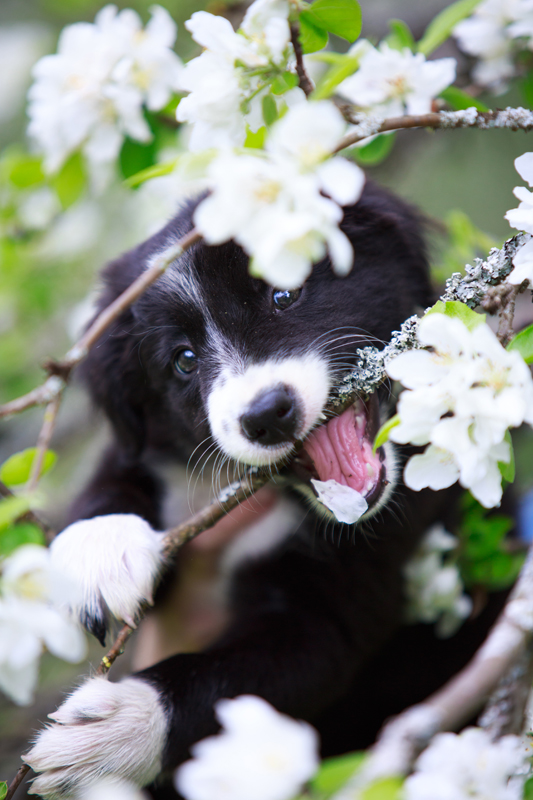
I had to include a puppy photo, and this one is adorable. Not just framed by flowers, but interacting with them by biting on the branch. The story is about how clever people think dogs are, and this one is delightfully balmy. (How clever do you think your dog is?).


Thank you to Companion Animal Psychology readers
Linn Currie (shutterstock.com)

This chinchilla golden Persian kitten is cute and playful, and I love the bold colours. Something about the fabric reminds me of the upholstery on seats on English buses and trains in times gone by. I used this photo on social media to say thank you to everyone who reads, likes, shares and retweets my blog. It's the support and encouragement from readers like you that makes it all worthwhile.